

The Persian carpet: from export treasure to collector's item
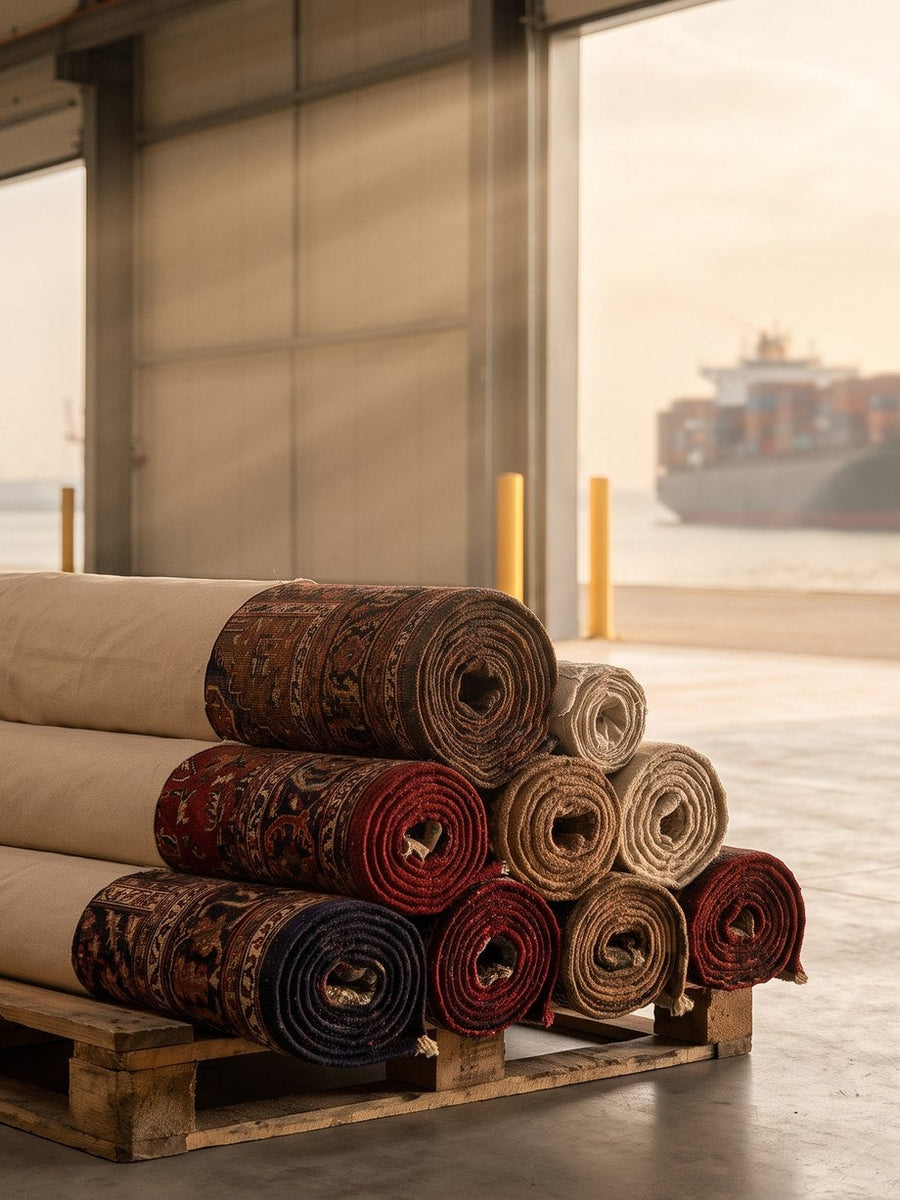
For centuries, the Persian rug has been a symbol of craftsmanship, wealth, and taste. It has graced palaces, museums, and the living rooms of collectors all over the world. But in 2026, exports from Iran have virtually come to a standstill.
With this, the Persian rug is shifting from a trade commodity to a collector's item. In this blog, you will read how this came to be, what makes a Persian rug so special, how to recognize an authentic one, and why it is a piece to cherish for a long time.
From $2 billion to almost zero
Iranian carpet exports have all but disappeared over the past thirty years:
- 1994: exports generate more than $2 billion, one of the strongest years ever. (Iran International)
- 2017: still over $400 million. (Oman Observer / AFP)
- 2023-24: around $50 million. (bne IntelliNews)
- Year to March 2025: $41.7 million. (Oman Observer / AFP)
- May 2026: according to an industry leader from Fars province, virtually zero. (Iran International)
There are multiple reasons for this. In 2018, the US reintroduced sanctions, causing Iran to lose its largest buyer. At the same time, countries such as India, Pakistan, China, and Turkey took over a large share of the market, often with copies of Persian designs. (Iran International) Within Iran itself, families are increasingly opting for cheap, machine-made rugs due to the collapsing currency.
The 2026 war and the crisis surrounding the Strait of Hormuz provided the final blow. Read more about this in our blog on the Hormuz crisis and lead times.
Why Persian rugs are so special
The art of carpet weaving in Persia goes back thousands of years. The oldest known knotted carpet, the Pazyryk carpet from the 5th century BC, is often associated with Persian weaving traditions. The weaving art of the Fars and Kashan regions has been on the UNESCO Intangible Cultural Heritage list since 2010.
What distinguishes a Persian rug:
- The knot. Many Persian rugs are knotted with the asymmetric Persian knot (Senneh knot). This allows for very fine, detailed patterns. In regions such as Tabriz and Heriz, the symmetric Turkish knot is also traditionally used.
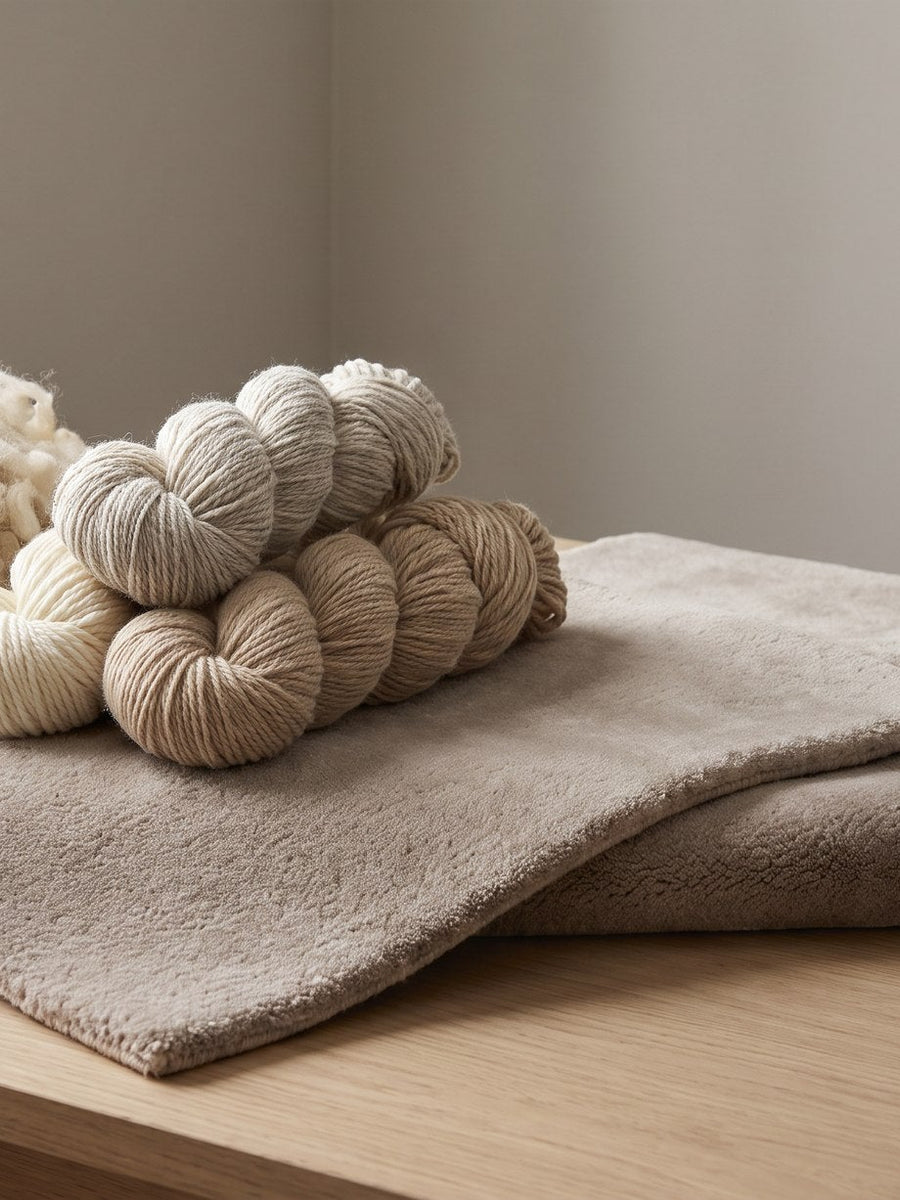
- The wool. Iranian weavers often use hand-spun wool, sometimes kork wool: the soft, shiny wool from the neck and shoulders of the sheep.
- The colors. Traditionally, dyeing is done with vegetable dyes, such as madder (red), indigo (blue), pomegranate peel, and walnut. Small color variations in the field, called abrash, are a sign of genuine handiwork.
- The design. From large central medallions to continuous motifs like the herati and boteh patterns. Each region has its own visual language.
- The time. A finely knotted rug of a few square meters can take a weaver months to over a year to complete.
The most well-known regions of origin
Persian rugs are named after the city or region where they were knotted. Each place has its own style.
| Origin | Style | Material | Recognized by |
|---|---|---|---|
| Tabriz | Versatile: medallions, flowers, hunting scenes | Wool, often with silk | Tight, fine knotting and a wide variety of designs |
| Heriz | Bold and geometric | Sturdy wool | Large angular medallion, brick red and indigo; very durable |
| Isfahan | Classic, symmetric, and refined | Fine wool, often on a silk warp | Rich floral motifs around a central medallion |
| Kashan | Classic floral | Soft kork wool, sometimes silk | Deep red and dark blue, round medallion |
| Nain | Light and elegant | Fine wool with silk accents | Ivory, cream, and light blue; silk contours |
| Qom | Luxury, often entirely silk | Silk | Silk sheen and very fine details |
| Kerman | Soft and floral | Wool | Pastel colors and lush floral borders |
With Nain rugs, you often see the designation 4la, 6la, or 9la. This refers to the number of threads in the warp: the lower the number, the finer the rug.
How to recognize a real Persian rug?
Now that supply from Iran has stalled, there are more copies in circulation than ever. Many designs are imitated in other countries, sometimes by hand, sometimes by machine. Therefore, pay attention to these points:
- Examine the back. With a hand-knotted rug, you will see the pattern almost as sharply on the back, with small irregularities. A machine-made rug has a perfectly even, tight back.
- Look at the fringes. In a knotted rug, the fringes are an extension of the warp threads. If they have been sewn on later, it is almost certainly machine-made.
- Look for abrash. Subtle color variations in the field indicate hand-spun wool and vegetable dyes.
- Look for small imperfections. A motif that deviates slightly or an edge that is not perfectly symmetrical: that is the weaver's hand.
- Ask for provenance and documentation. A reliable dealer can tell you where and when a rug was made.
- Be critical of the price. A large, finely knotted Persian rug for a rock-bottom price does not exist.
A "Persian design" is therefore not the same as a Persian rug. Only a rug that has been knotted in Iran can truly call itself Persian.
Why a Persian rug is an investment
You do not buy a Persian rug for a few years. It is a piece that stays with you, and often with the next generation.
- Scarcity. New supply from Iran has almost completely dried up. Every genuine Persian rug currently in Europe is therefore harder to replace.
- Disappearing craftsmanship. The weaving profession yields less and less in Iran; some weavers earn only a few dollars a day (Euronews). As a result, knowledge passed down through generations is at risk of disappearing.
- Sustainability. A well-knotted wool rug will last for decades with normal use, sometimes more than a century.
- It gets better with time. Through use, the wool develops a soft sheen and the colors become richer.
We will be honest: a rug is primarily something to enjoy, not something to speculate with. Value development depends on origin, quality, condition, and design. But those who buy a good Persian rug buy something that retains its value.
Maintenance: how to keep your Persian rug beautiful for generations
- Vacuum regularly, but without a rotating brush. Vacuum in the direction of the pile and never over the fringes.
- Rotate the rug once or twice a year so that it wears and fades evenly.
- Avoid bright sunlight. Direct sunlight can cause vegetable colors to fade.
- Use a good rug pad. It prevents slipping and protects the knots.
- Blot spills immediately, do not rub. Use cold water and no harsh cleaning agents.
- Have it professionally cleaned, on average once every three to five years, depending on use.
- Storing it? Roll the rug with the pile facing inward, wrap it in breathable cotton, and protect it from moths.
Persian rugs at Koreman
As a family business in Maastricht, we have been working with oriental rugs for years. In our showroom, you will find a selection of Persian and oriental pieces, each with its own story.
We will honestly tell you where a rug comes from, how it was made, and what its condition is. This way, you know exactly what you are buying.
Are you looking for a Persian rug, or do you want to know what makes the rug you already have special? Come by for personal advice.
Frequently asked questions
Why are Persian rugs so expensive?
A Persian rug is entirely hand-knotted, often with hand-spun wool and vegetable dyes. A large, fine rug can take a weaver months to over a year to complete.
Can you still buy new Persian rugs?
Hardly. Exports from Iran dropped to almost zero in 2026. What is currently for sale are mainly rugs that are already in Europe.
What is the difference between a Persian rug and an oriental rug?
A Persian rug comes from Iran. "Oriental rug" is a broader term for hand-knotted rugs from places including Iran, Turkey, the Caucasus, Afghanistan, Pakistan, and India.
How do you recognize a real Persian rug?
Look at the back (pattern visible, small irregularities), the fringes (extension of the warp threads), and color variations in the wool. Always ask the seller about the origin.
What is the most famous type of Persian rug?
Tabriz, Isfahan, Kashan, Nain, Qom, Heriz, and Kerman are among the most famous regions of origin, each with its own style.
How long does a Persian rug last?
With proper maintenance, it lasts for decades, and often longer than a human lifetime.
How often should you have a Persian rug cleaned?
On average, once every three to five years by a specialist, depending on use.
Sources
- Iran International — carpet exports collapse to near zero
- Iran International — Persian carpet exports collapse 95% under sanctions
- Oman Observer / AFP — Are Persian rugs becoming a relic?
- bne IntelliNews — Iran Persian rug exports
- Euronews — How the rug got pulled out from under Iran's carpet weavers