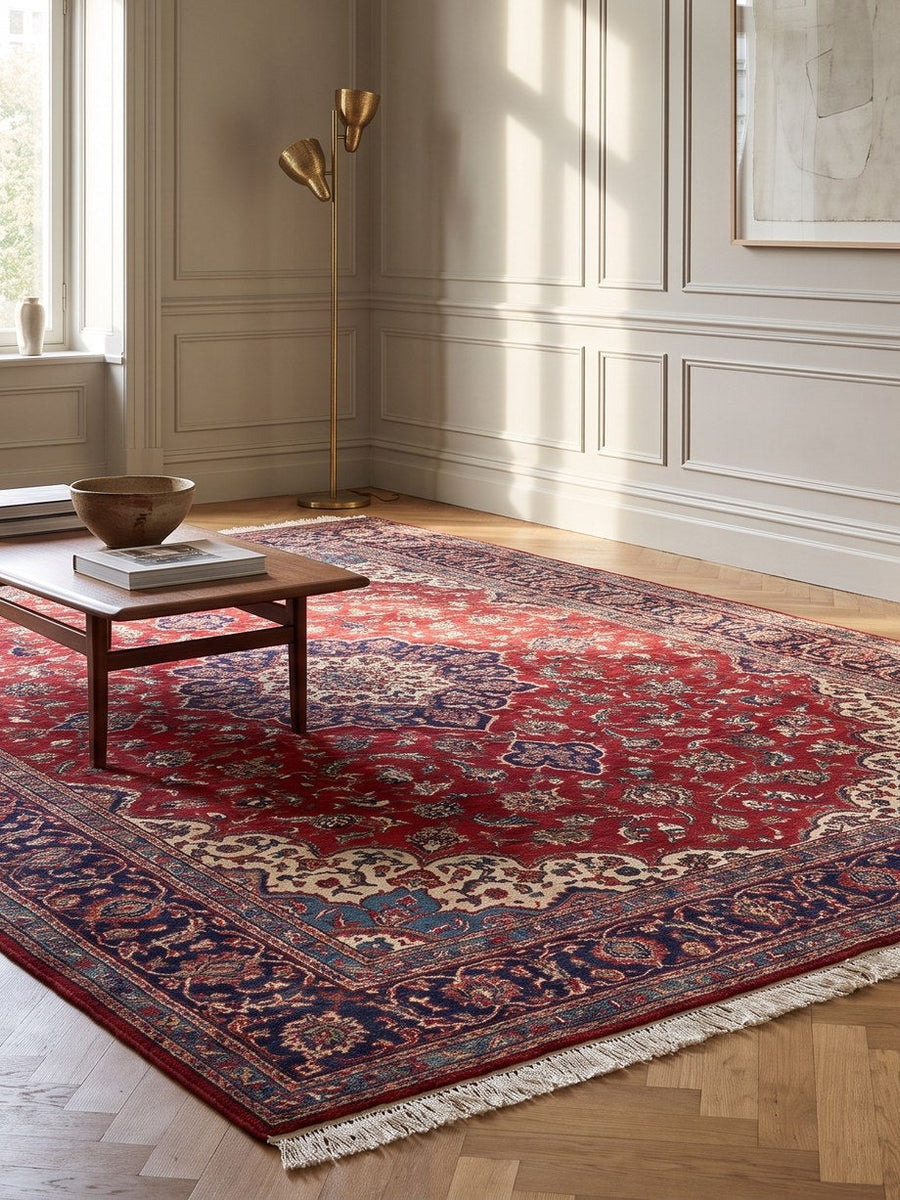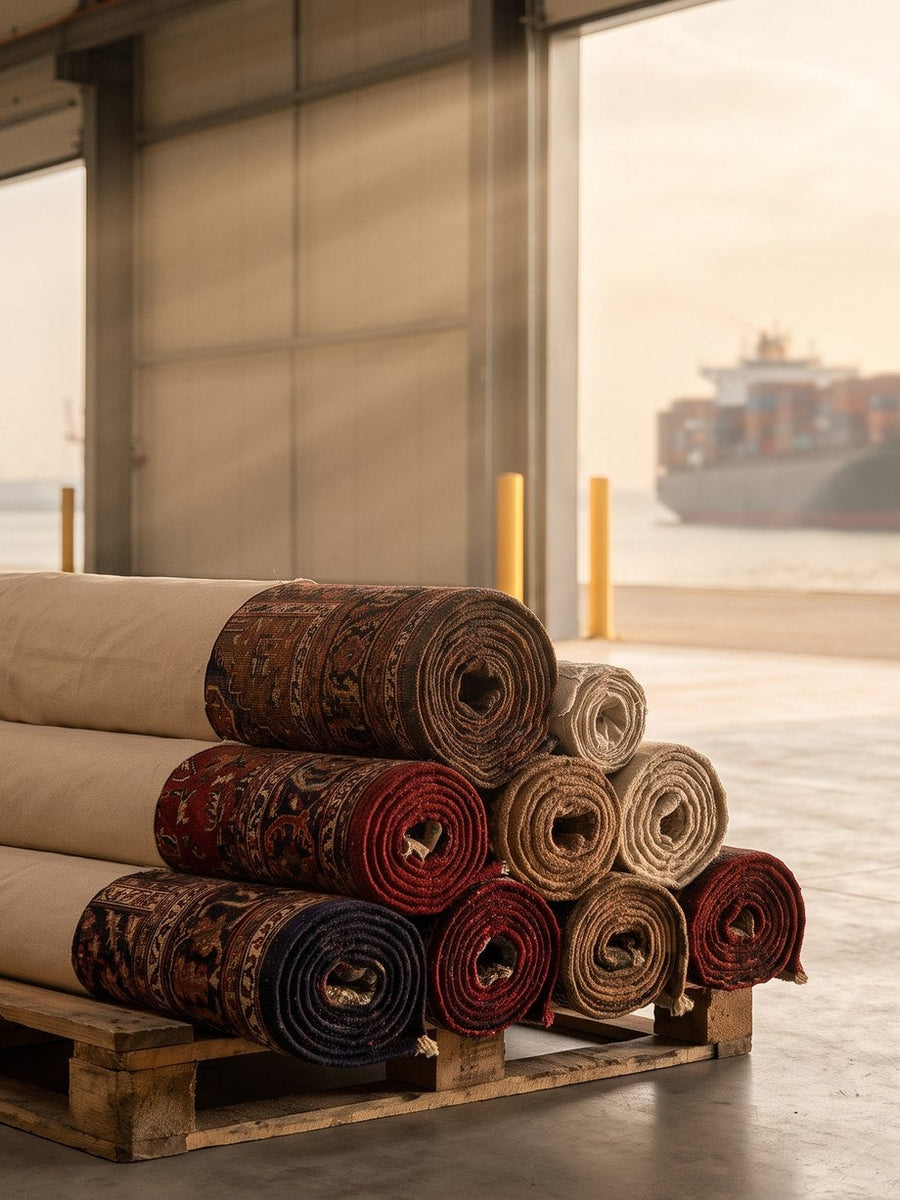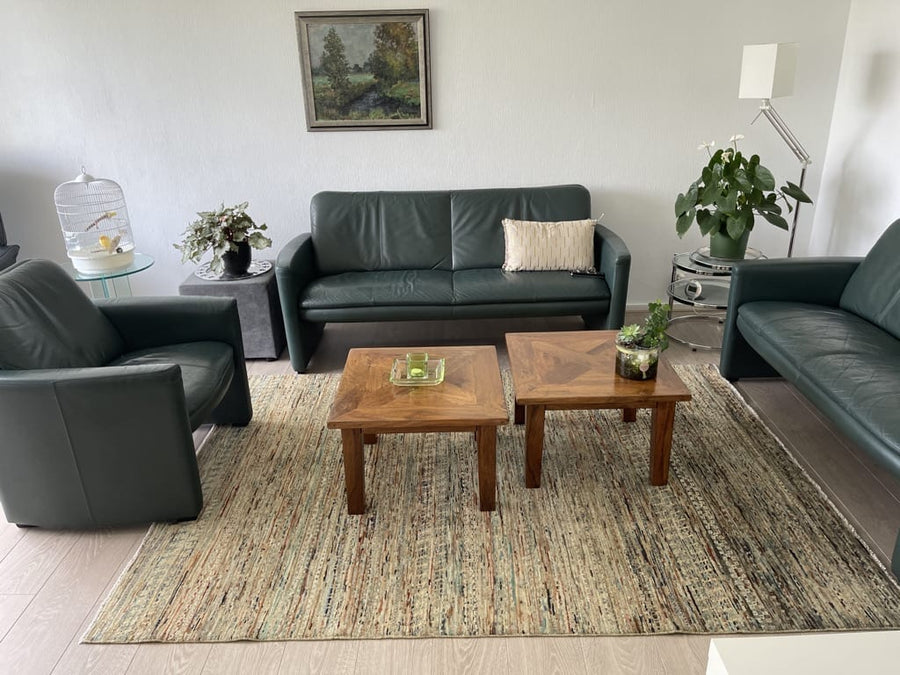


Wool prices are rising: what does that mean for your rug?
Wool has become significantly more expensive in 2026. At auctions in Great Britain and New Zealand, the price is about 70% higher than a year ago. This is relevant for anyone considering a wool rug: wool is the primary raw material for most handmade rugs.
In this blog, we explain what is happening in the wool market, why wool is becoming scarcer, and what that means for the price of rugs. And why a good wool rug might be a wise choice right now.
What is happening in the wool market
After years of low prices, wool is making a strong comeback in 2026. The increase is visible in all major wool regions:
- Great Britain: after the first four auctions of the 2026 season, the average price was £1.70 per kilo, 70 pence higher than a year earlier. According to British Wool, auction prices in both the UK and New Zealand are about 70% above the level of twelve months ago.
- Ireland: where farmers received around 20 cents per kilo last year, they are now being paid up to €1 per kilo. That is a fivefold increase.
- Australia: at the beginning of April 2026, the wool price stood at 1,786 Australian dollars per 100 kilos, nearly 43% higher than a year earlier.
Notably, demand for crossbred wool is particularly strong. This is the sturdier, somewhat coarser wool that has traditionally been used extensively in rugs and carpeting. So, the very type of wool our industry needs is in high demand.
Why wool is becoming scarcer
The price increase is no coincidence. Three developments are playing out simultaneously.
- Fewer sheep for wool. For years, wool brought farmers almost nothing, while lamb paid well. Many sheep farmers therefore opted for meat instead of wool. In Australia, the world's largest wool producer, volumes have decreased as a result.
- Production remains low for the time being. The Australian Bureau of Agricultural and Resource Economics (ABARES) expects total wool production to decline by another 9% in 2026-27.
- More competition for supply. Because Australia is exporting less, processors in China are competing harder for the available wool. At the same time, demand for wool clothing is picking up again.
Rebuilding a flock takes years. A quick return to the low prices of 2024 and 2025 is therefore unlikely.
What this means for the price of rugs
More expensive wool will eventually be reflected in the price of new wool rugs. How much depends on the type of rug.
- Hand-knotted rugs: the largest part of the price here is the manual labor. A knotter sometimes works for months on a single rug. The price of wool is a factor, but the increase is relatively mild.
- Hand-tufted and handloom rugs: these are made more quickly, meaning the material constitutes a larger portion of the cost. Here, a higher wool price is more noticeable.
- Large formats and custom work: more square meters means more wool. For large rugs, every euro per kilo counts more significantly.
The impact is not immediate. Yarn is purchased in advance, and producers work with existing contracts. As a result, you usually only see higher raw material prices reflected in new collections after several months.
A nuance: wool isn't suddenly exorbitantly expensive. According to ABARES, prices in 2026-27, adjusted for inflation, remain about 4% below the average of the past ten years. It is primarily a recovery after a few exceptionally cheap years. Added to this are the higher transport costs this year, but we will write about those in a future blog.
How to recognize quality wool in a rug
When wool gets more expensive, the temptation for producers to cut costs is great. For example, by blending in cheaper fibers or using a lower quality of wool. These points will help you recognize a good wool rug:
- Origin of the wool. New Zealand wool is known for being strong, resilient, and easy to dye. Himalayan and Tibetan highland wool has a high lanolin content, which gives the rug a natural shine and dirt-repellency.
- Resilience. Press your hand into the pile and let go. Good wool springs back immediately.
- Feel. Quality wool feels full and soft, not dry or coarse. A slightly greasy feel is actually a good sign: that is the natural lanolin.
- Composition. Ask for the exact composition. "Wool blend" can mean that synthetic fibers are included.
- Density. Bend a corner of the rug. The less backing you see, the denser and more durable the pile.
- Finishing. Look at the back and the edges. Tight, even work points to craftsmanship.
Are you in doubt? A good specialist dealer will tell you exactly where the wool comes from and how the rug was made.
Why a wool rug is a sensible choice now
More expensive wool sounds like bad news, but it primarily underscores the value of the material. A good wool rug is not a disposable product.
- It lasts for decades. Wool fibers are naturally resilient. A well-knotted rug can last for generations, and a synthetic rug cannot match that.
- It stays beautiful. Wool absorbs color deeply and develops a beautiful patina over the years.
- It is practical. The lanolin in wool makes it dirt-repellent. Furthermore, wool is naturally flame-retardant and regulates moisture.
- It is natural. Wool is a renewable, biodegradable raw material.
Because higher raw material prices filter through with a delay, customers who choose now often still buy at current prices. Especially for rugs that are already in stock. If you have been considering a wool rug for a while, waiting is probably not in your favor.
How we handle this
As a family business in Maastricht, we follow the raw materials market closely. We work with wool, but also with Tencel, natural silk, mohair, and bamboo silk. Each material has its own character and price trend.
In our showroom, you can see and feel the difference yourself. We will tell you exactly where the wool comes from and whether a rug is hand-knotted, hand-tufted, hand-woven, or made on a handloom. This way, you know what you are buying and why it is worth the price.
Are you looking for a specific size or a custom color? Custom work in wool is also possible. Feel free to contact us or stop by for personal advice.
Frequently asked questions
Will wool rugs become more expensive in 2026 and 2027?
Probably. Wool has become about 70% more expensive in a year at auctions in the UK and New Zealand. That increase is reflected in the prices of new collections with a delay of several months.
Why has wool become so expensive?
Many sheep farmers have switched from wool to meat in recent years because wool yielded very little. As a result, supply has decreased, while demand from countries including China is increasing.
Will the wool price remain high?
The expectation is that supply will remain tight in the coming years. In Australia, a production decrease of another 9% is expected for 2026-27.
Is a hand-knotted rug just as sensitive to the price of wool as a tufted rug?
No. For hand-knotted rugs, the largest part of the price is the manual labor. For tufted and handloom rugs, the material accounts for a larger portion of the cost.
Which wool is the best for a rug?
New Zealand wool is strong and resilient. Himalayan and Tibetan highland wool is rich in lanolin, which provides shine and dirt-repellency.
Is a wool rug a good investment?
Yes, provided it is well made. A high-quality wool rug lasts for decades and stays beautiful, while cheap synthetic rugs wear out after a few years.