

Rugs on underfloor heating: always a good idea
Underfloor heating is on the rise. More and more homes are saying goodbye to traditional central heating with radiators. Since 2018, new-build homes have been standardly equipped with underfloor heating as the main, gas-free heating system. Underfloor heating lies close to the surface so that we can optimally benefit from heat emission. But on top of the screed, there is usually a hard floor of wood, PVC, or stone material. The question many people ask is: "If I want to place a rug on my floor, what will be its effect on the heat transfer from the underfloor heating?"
Rugs, whether made of wool, cotton, silk, or synthetic materials, can affect the heat transfer of an underfloor heating system. However, the effect of a rug on heat transfer can be both positive and negative, depending on various factors such as the rug's thickness, material, and size.
Which floor type for underfloor heating?
The subfloor can also affect heat transfer. Oak transmits heat better than, for example, a floor of beech or jatoba wood. Although it is not a significant difference, you would do well to consider - if you have the choice - the type of wood you want to lay on top of the underfloor heating.
Rugs act as an insulating layer between the floor and the room, meaning they can absorb and retain some of the heat generated by the underfloor heating. This can result in a lower surface temperature of the floor and a longer warm-up time for the room. So, in this respect, a rug can, in some circumstances, reduce the efficiency of underfloor heating.
On the other hand, rugs can also function as a heat storage medium. Rugs can retain the heat they absorb from the underfloor heating and gradually release it into the room. This can result in a more even heat distribution and can help keep the room warm even after the underfloor heating is turned off.

Which rug on a floor with underfloor heating?
A wool rug from Koreman has excellent thermal properties. It is a natural insulator and has a high heat storage capacity. A wool and 100% natural rug will therefore retain heat longer and release it evenly into the room. Synthetic rugs lack this property.
The backing or underside of a rug laid on a floor with underfloor heating also affects heat emission. Synthetic rugs usually have a dense, uniform foam backing that prevents heat from being efficiently transmitted.
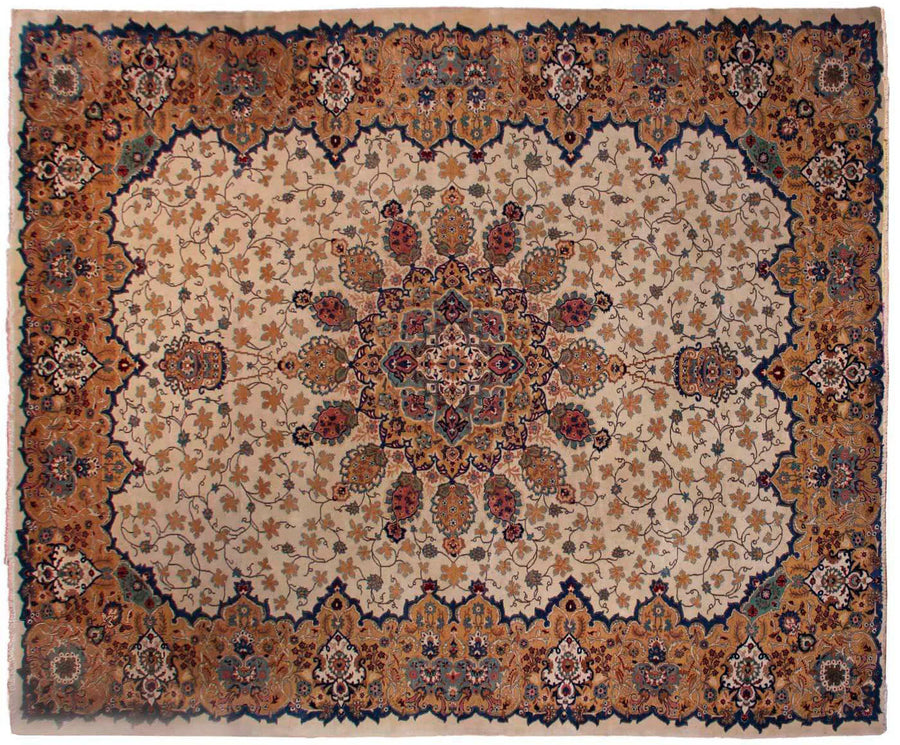
An Oriental rug from Koreman is hand-knotted or hand-woven. It does not have a separate backing like machine-made rugs. The structure of a hand-knotted rug insulates heat much less than a synthetic rug.
A natural rug is cozy and functional
If your home has underfloor heating or you plan to install it, consider which type of floor you choose on top of the screed. A floor with ceramic tiles is ideal for underfloor heating, but such a floor can sometimes feel cold. Moreover, if you walk on a stone floor in the months when the heating is off, you will feel it on your feet if you walk barefoot or in socks. In this case, a rug offers a solution.
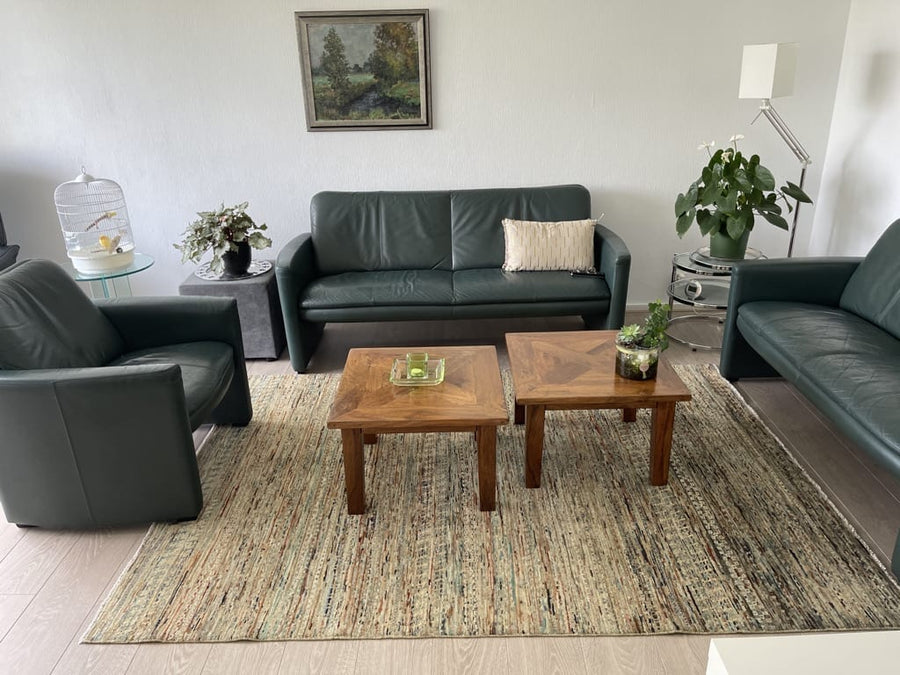
A natural rug makes the room less cold, connects the furniture, makes the room cozier, and you can comfortably walk barefoot or sit on it. And you wouldn't do the latter on a stone floor. That's too cold and uncomfortably hard.

Conclusion: rug and underfloor heating
Enjoy the radiant heat of underfloor heating and the comfort of a 100% natural rug. It's an ideal combination. The underfloor heating warms the room evenly, and a natural wool or silk rug transmits heat well and even retains it. Feel free to turn down the underfloor heating an hour before going to bed. The rug prevents your interior from cooling down too quickly and saves energy costs.
Would you like to know more about a suitable rug for your interior with underfloor heating? Koreman Exclusive Carpets is happy to advise you on which rug is most suitable, beautiful, and comfortable. Visit Koreman's store-showroom in the center of Maastricht for heartwarming advice and a rug. Also interested in improving acoustics with a rug? Click here.